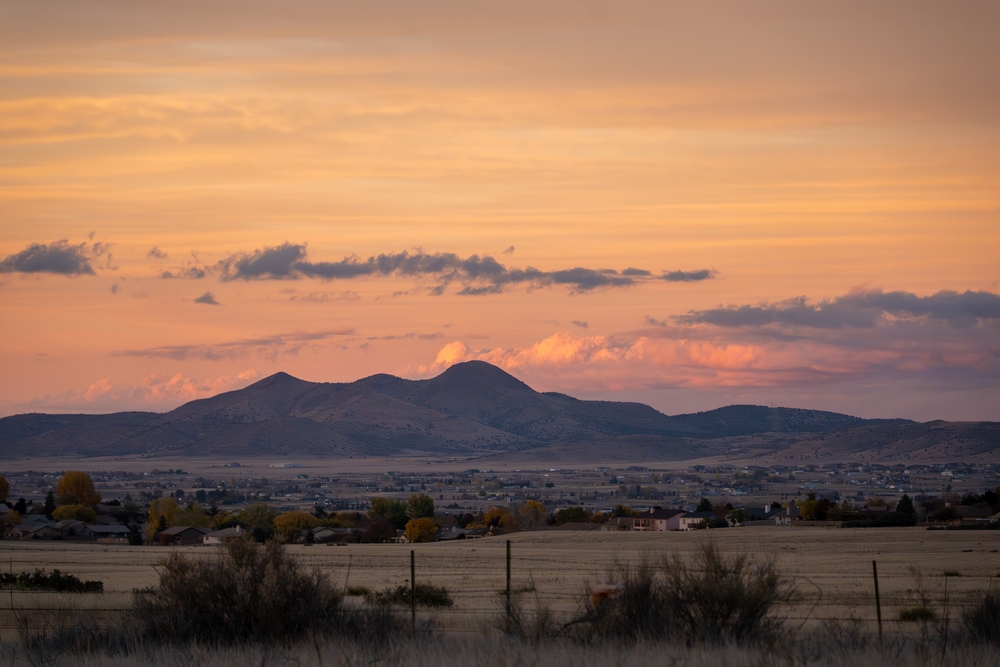
Downtown Prescott Valley is the result of decades of planning, adaptation, and patience. In a recent podcast, community builders Brad Fain and Ron Fain walk through the area’s evolution. They explain what now serves as a central hub for shopping, healthcare, entertainment, and employment was once a simple square mile of open land with a single school surrounded by horse pasture.
The transformation did not happen quickly. The Fains describe the development of downtown as a process spanning more than 50 years, beginning with their father’s (Bill Fain) vision to help Prescott Valley become more than a community built along a highway. Early on, Prescott Valley functioned largely as a bedroom community, with limited services and infrastructure. The acquisition of what is now known as Section 14 laid out the groundwork for a long-term plan to build a true downtown core.
From the start, planning played a critical role, but not in a rigid way. Multiple professional planners contributed different versions of a master plan over the decades, each adapting to changing market conditions and community needs. The Fains emphasize that flexibility has been one of the most important factors in the area’s success. Zoning decisions, particularly the use of overlay districts, allowed the land to evolve as opportunities arose.
As the community matured, key components of a functioning downtown began to take shape. Essential services like grocery stores and civic buildings were early priorities, followed by larger anchors such as the event center, hospital, and entertainment venues. Over time, hotels, housing, and additional commercial spaces filled in the gaps, creating a more complete environment where people can live, work, and play.
One of the most overlooked drivers of community building, Brad Fain and Ron Fain explain, is the relationship between jobs, housing, and retail. Successful commercial areas depend heavily on proximity to employment centers. When people travel daily between home and work, they naturally support businesses along that route. This dynamic helps explain why certain areas develop faster than others, and why retailers carefully analyze population density, traffic patterns, and growth projections before choosing a location.
The Fains’ most recent podcast also addresses common misconceptions about growth. While some residents feel development is happening too quickly, the Fains point out that new projects are largely driven by demand from the community itself. Retailers and businesses rely on data and demographics to determine where to invest, meaning growth is a response to population increases and consumer behavior, not arbitrary decisions by Town leadership or community builders.
Ultimately, the story of downtown Prescott Valley is one of long-term vision paired with adaptability. It is not about forcing growth, but about creating the conditions for it to happen naturally. By planning for both current needs and future possibilities, the community has evolved steadily into the vibrant hub it is today, while still leaving room for what comes next.